Tucked away in the sacred lands of Tamil Nadu, the Vaitheeswarankoil Temple stands as a spiritual beacon that has drawn pilgrims, seekers, and lovers of ancient mysticism for centuries. Located in the small town of Vaitheeswarankoil in the Mayiladuthurai district, this temple isn’t just a place of worship—it’s an experience that bridges the divine with the earthly, healing with belief, and time with eternity.
The name “Vaitheeswarankoil” translates to “Temple of the Divine Healer.” Dedicated to Lord Shiva in the form of Vaitheeswaran, the God of Healing, this ancient temple reverberates with chants, incense, and centuries-old hope. It is believed that a visit here can cure diseases and ailments, both physical and spiritual. The legend of the temple states that Lord Shiva took the form of a healer to cure the ailments of gods and mortals alike. Even today, devotees offer their prayers in the belief that their illnesses will be healed, and they leave behind tiny replicas of affected body parts in silver or metal as tokens of gratitude or supplication.
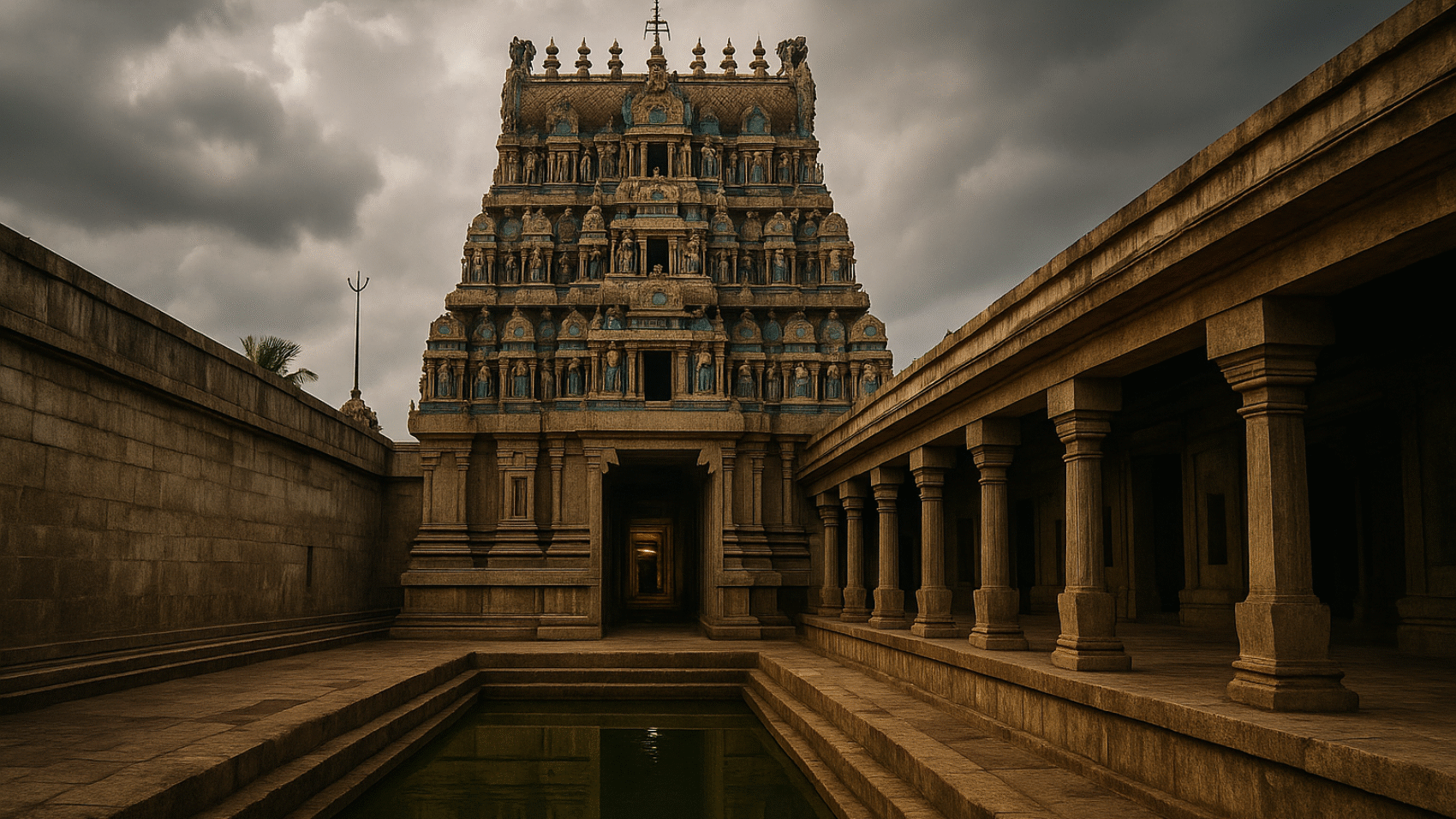
The very air of Vaitheeswarankoil seems to hum with spiritual energy. The temple, believed to have been constructed during the Chola period and later enhanced by the Nayak kings, is a masterclass in South Indian temple architecture. Its towering gopurams (gateway towers) are etched with detailed sculptures of gods, goddesses, mythical beasts, and scenes from ancient scriptures. Inside, the temple complex sprawls across stone corridors that echo with centuries of footsteps, silent prayers, and ringing bells. Each corner of this hallowed place is a chapter in a living scripture—etched not in ink but in devotion.
At the heart of the temple is the sanctum sanctorum housing the lingam of Lord Vaitheeswaran. The presence is palpable—silent yet omnipresent. Beside him stands Goddess Thaiyal Nayagi, the divine consort, known for her compassionate grace. The temple also has shrines dedicated to Lord Murugan, the Navagrahas (nine planetary deities), and even Lord Dhanvantari, the celestial physician from Hindu mythology.
One of the most unique aspects of Vaitheeswarankoil Temple is its inextricable link with the esoteric tradition of Nadi astrology. Believed to have been passed down by Sage Agathiyar and written by ancient seers on palm leaves, Nadi astrology is said to hold the past, present, and future of every soul who comes in search of their divine blueprint. The temple town is dotted with Nadi astrologers who, with the help of your thumbprint, will attempt to locate the palm leaf that holds your cosmic story. It is an experience that can be at once eerie and awe-inspiring, often leaving visitors with more questions than answers, and yet, strangely, with peace.
The temple tank, known as Siddhamirtham, is believed to contain healing properties. Bathing in this sacred water is considered an act of purification and is often performed before entering the inner sanctum. The water is said to have been blessed by celestial beings, infused with divine curative energy. Pilgrims often carry bottles of this holy water home, convinced of its sanctity and power.
What makes Vaitheeswarankoil truly transcendental is not just the rituals, nor the mythology—it is the raw and intimate relationship between the devotee and the divine that plays out in infinite forms across the temple grounds. It’s in the whispered prayers of an anxious mother, the reverent silence of an old man touching the cool stone floor, the excited chatter of a child looking at the colorful kolams (rangolis), and the tears of a stranger who finally feels seen by the cosmos.
Despite the rise of modern medicine, the spiritual magnetism of this temple has not faded. Instead, it has evolved. The temple continues to be a powerful site of pilgrimage, especially on auspicious days like Tuesdays, which are believed to be ruled by Lord Angaraka (Mars), a planetary deity worshipped here to reduce ill effects and bring prosperity.
Evenings in Vaitheeswarankoil are particularly spellbinding. As the sun casts its golden light on the temple towers, the priests perform the evening poojas with fire and chants that echo through the courtyards. The temple transforms into a theater of divine expression—light, sound, scent, and spirit dance together, binding past and present, earthly and eternal.
In a world where technology reigns and logic often overrules belief, Vaitheeswarankoil Temple stands as a bastion of faith—unmoved, unbroken, and deeply relevant. It doesn’t just offer cures for the body but peace for the soul. Here, healing is more than an outcome—it is an atmosphere. It is in the architecture, the chants, the silences, and the surrender.
For those who walk in with burdens, the temple offers not only a sacred space but a promise. A promise that somewhere, beyond the seen and the spoken, the divine listens, heals, and remembers.